
Free scrap car removal in France
Do you want to get rid of your vehicle in France? Call us now, free service!
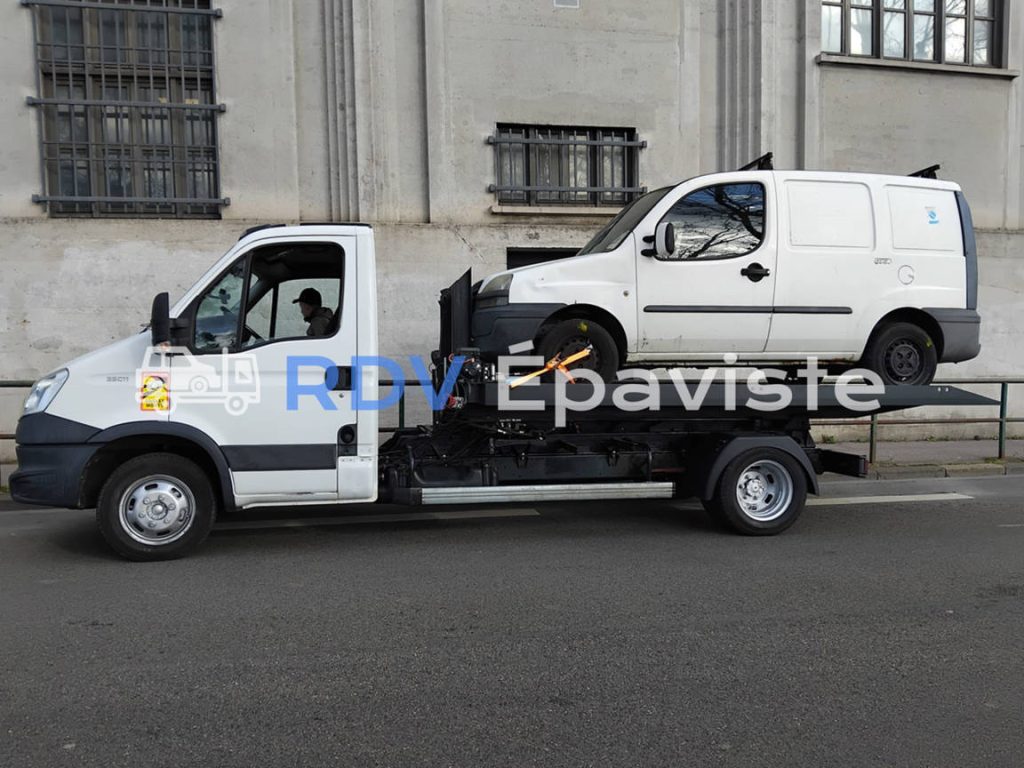
- Damaged cars
- MOT failures
- Non-runners
- Pre-loved and unwanted
- ELV (End-of-Life Vehicles)
- Mechanically faulty cars
- Accident damaged cars
Information: We do not sell car spare parts
We operate in the surrounding towns in France:
scrap yard near me

Do you want to have your vehicle picked up quickly and free of charge?

Send us a message below and we’ll get back to you shortly (please check the cities above where we are present before contacting us).
What documents do I need to get rid of my vehicle?
✓ vehicle registration document called « carte grise » or « certificat d’immatriculation » in French, you must be the owner.
✓ your identity document – only for a french car.
✓ certificate of non-pledge called certificate of administrative situation (free and online quickly) – only for a french car.
(We do not sell car spare parts and buy back vehicles)
Scrap metal dealer and wrecking yard
Get rid of your out of order, burned out or damaged car.
Do you want to have your vehicle picked up quickly and free of charge?
Broken down, out of order or not running
« Cost of repairs too expensive, you might as well buy a new car!
Old abandoned car
« My car has been left abandoned for years, it’s time to get rid of it. »
Burned car
« My car was burned last night, I need to have it removed as soon as possible. »
FAQ : Frequently asked questions
How to scrap a car in France?
Scrapping a car in France is straightforward once you know the steps. The key rule is that an end-of-life vehicle must go to a treatment facility approved by the prefecture, known as a “centre VHU”. This is the only way to have the car legally destroyed and its registration cancelled. Here is how it works, step by step.
1. Get your documents together
You will need:
- the vehicle registration document (the French “carte grise”, or your foreign registration document such as a UK V5C);
- valid ID: passport, national identity card or residence permit;
- for a French-registered car, a vehicle status certificate (“certificat de situation administrative”), which confirms the car has no outstanding finance and has not been reported stolen. It is free, takes a few minutes to get online and must be less than fifteen days old.
2. Book a collection
Contact a vehicle removal company (an “épaviste”) that works with an approved facility. Give the address of the car, its make and model, its condition and any access issues. In most cases, collection is free and can be arranged the same day or the next day. The car does not need to run: it is loaded onto a recovery truck with a winch.
3. Sign the transfer on the day
When the removal company arrives, you check the documents together. You cross out the registration document and write “cédé pour destruction” (transferred for destruction), with the date, time and your signature, then sign the transfer form. Keep your copy: it proves the car is no longer your responsibility.
4. Let the facility handle the rest
The car is taken to the approved treatment facility, where it is depolluted, dismantled and recycled. The facility issues the certificate of destruction and cancels the registration in the French system. You do not need to go to the prefecture.
5. Tie up the loose ends
- Cancel your insurance by sending your insurer a copy of the transfer document.
- If the car is registered abroad, inform the authority in that country with the certificate of destruction, for example the DVLA for a UK car.
- Keep the certificate of destruction safe, in case a fine or tax query arrives after the car has gone.
Things to avoid
Do not hand your car to someone who offers to take it away without any paperwork. Without a signed transfer and a certificate of destruction, you remain legally responsible for the vehicle, including any fines or offences linked to it.
Can I sell my car for parts in France?
Yes, but what you are allowed to do depends on two things: whether the car still runs, and who is buying it. Writing “sold for parts” on the paperwork carries no special legal weight in France and does not exempt you from any of the usual rules.
If the car no longer runs
In France, a car that is no longer roadworthy is classed as an end-of-life vehicle, and legally it is treated as waste. That means you cannot sell it to a private buyer, even for parts. It can only go to a professional: in practice, a treatment facility approved by the prefecture (a “centre VHU”, similar to an Authorised Treatment Facility in the UK) or a removal company working with one. Only these facilities are allowed to strip a vehicle for parts, and they must depollute it first.
For the same reason, taking the car apart yourself, selling the parts one by one and then getting rid of the shell is not an option. A car missing its engine or other major components may also no longer qualify for free collection. Leaving a stripped shell behind can lead to a fine of up to 1,500 euros.
The straightforward route is to have the complete vehicle collected. You sign a transfer marked “cédé pour destruction” (transferred for destruction), and the approved facility issues the certificate of destruction and cancels the registration.
If the car still runs
You can sell it to a private buyer, just like any used car sale. The usual obligations still apply: a roadworthiness test (the French “contrôle technique”) less than six months old if the car is over four years old, a vehicle status certificate less than fifteen days old, and an online declaration of the sale. Marking the registration document “sold for parts” does not get you out of the roadworthiness test. And until the sale is properly declared, any fines incurred by the new owner may still be sent to you.
Selling to a professional, such as a garage, a dealer or an approved treatment facility, does not require a roadworthiness test.
The bottom line
For a car at the end of its life, the simplest and safest choice is to have it collected by a removal company working with an approved treatment facility. It costs nothing, there is no paperwork to file with the prefecture, and the signed transfer document immediately releases you from any further responsibility for the vehicle.
Who can remove my end-of-life car for free near me?
To get rid of an end-of-life car in France, you need to use a vehicle removal specialist (known in French as an “épaviste”) who works with a treatment facility approved by the local prefecture, called a “centre VHU” (the French equivalent of an Authorised Treatment Facility). This is the only legal route: a car destined for scrap must end up in an approved facility, where it is depolluted, its reusable parts are recovered and its materials are recycled. You cannot simply leave it at a waste site or hand it over to anyone.
Rdv Épaviste puts you in touch with partner vehicle removal companies based in your area. Each area is covered by a named business, whose company name and SIREN number are shown on the page for its town. Our partners operate within about 30 km of the main towns: Lyon and the Rhône, Saint-Étienne and the Loire, Grenoble and the Isère, Annecy and Haute-Savoie, Chambéry and Savoie. They also cover many surrounding towns, from Villeurbanne to Aix-les-Bains, Albertville and Voiron.
The service is free for the vast majority of vehicles: cars, vans, trucks and motorhomes. The removal company earns its money by selling the vehicle by weight to the approved facility, which means it can charge you nothing for travel, towing or paperwork. Two exceptions are clearly stated on the site: caravans, which are charged from 150 euros because they contain very little metal, and motorcycles and scooters, which are free depending on the area.
Be wary of flyers and adverts that give no company name. An undeclared operator may drive off with your car without giving you any paperwork, and you then remain legally responsible for the vehicle: fines, insurance, and even offences committed with it. Before handing over your car, always check the company name, its SIREN number and the approved facility where the vehicle will be taken. On Rdv Épaviste, this information is shown for every area.
To find the nearest professional, open the page for your town or call the number shown for your area.
Is scrap car removal really free, with no hidden costs?
Yes, for most vehicles the removal is completely free. You pay nothing for the removal company’s travel, for towing with the recovery truck, or for the paperwork involved in scrapping. There is no quote to sign and no extra charge added on the day.
This is not a sales pitch: it is simply how the industry works. An end-of-life car contains steel, aluminium, copper, a battery, tyres and parts that can still be reused. The removal company takes the vehicle to an approved treatment facility, which buys it by weight. That value pays for the work, which is why the removal company can come out without charging you.
Prices are shown on every town page, so there are no surprises:
- removal of a car, whether broken down, damaged in an accident, burnt out or simply worn out: 0 euros;
- removal of a truck, van, light commercial vehicle, motorhome or tractor: 0 euros;
- paperwork: 0 euros;
- scooter, motorcycle or quad bike: free depending on the area;
- caravan: from 150 euros, excluding recycling costs, because a caravan is mostly wood, plastic and polyester with no resale value.
Free removal also assumes that the vehicle can be legally transferred. It must be free of any finance or legal objection, and you must be able to provide the required documents. If your situation is unusual, for example a car without its registration document, a vehicle that is very hard to reach, or a car stripped of its main parts, mention it when you call: the removal company will tell you before travelling whether the job is still free.
One piece of advice: be wary of operators who advertise free removal and then ask for money on the spot, or who offer to pay you cash without any paperwork. A reputable professional tells you the conditions before coming out and gives you the transfer documents on the day of removal. That is what the partner companies listed on Rdv Épaviste guarantee.
How quickly can someone collect my car?
In most cases, the removal company can come out the same day or the day after you call. Rdv Épaviste partners work seven days a week, so it is usually easy to find a slot quickly, including at weekends. The exact timing depends on your town, the removal company’s schedule that day and how easy the vehicle is to reach.
The closer you are to the main town in your area, the faster the collection. In Lyon, Saint-Étienne, Grenoble, Annecy or Chambéry and their surrounding areas, a same-day visit is often possible. In a more remote village, the removal company sometimes groups several collections into one round, which can push the appointment back by a day.
Once on site, the collection itself is very quick. It usually takes just a few minutes to load a car onto the recovery truck, which is fitted with a winch. Allow a little longer if the vehicle is stuck in a narrow garage, an underground car park, on a slope, or if it is badly damaged. Either way, the removal company leaves with the vehicle. The paperwork also only takes a few minutes: checking the documents, signing the transfer for destruction and handing you your copy.
To save time on the day, have the following ready in advance:
- the vehicle registration document;
- your ID;
- the vehicle status certificate (proof the car has no outstanding finance), which can be obtained free online in a few minutes for French-registered cars;
- the keys, if you still have them.
When you call, also say exactly where the vehicle is, whether it still runs, and whether there are any access constraints: a gate, a height restriction, a narrow street. This information means the removal company can bring the right equipment and avoid a second trip.
If your car is parked on a public road, do not wait too long. In France, a vehicle left in the same spot for more than seven days can be fined and then towed to the pound, with costs payable by you. Calling a removal company quickly avoids that risk.
Do you cover my town, and what are your hours?
Rdv Épaviste partners cover five main areas in the Auvergne-Rhône-Alpes region, each organised around a main town. They travel within about 30 km of that town.
- Rhône and Ain: Lyon, Villeurbanne, Vénissieux, Vaulx-en-Velin, Saint-Priest, Caluire-et-Cuire, Bron, Meyzieu, Villefranche-sur-Saône, Givors, Vienne and nearby towns.
- Loire: Saint-Étienne, Saint-Chamond, Firminy, Rive-de-Gier, Le Chambon-Feugerolles, Andrézieux-Bouthéon, Saint-Just-Saint-Rambert.
- Isère: Grenoble, Échirolles, Fontaine, Saint-Martin-d’Hères, Saint-Égrève, Voiron, Voreppe, Pontcharra.
- Haute-Savoie: Annecy and its districts, Rumilly, Faverges.
- Savoie: Chambéry, Aix-les-Bains, Albertville, La Ravoire, La Motte-Servolex, Le Pont-de-Beauvoisin, Montmélian and the surrounding towns.
If your town is not on this list, it does not mean the removal company cannot come. Call the number for the nearest area and give your address: they will tell you straight away whether they can help. For places between two areas, for example between Chambéry and Grenoble, the nearest partner will come out.
As for hours, our partners work seven days a week, weekends included. Appointments can be booked by phone or through the contact form on your town’s page. If you send a message outside working hours, you will be called back at the next available time. Mention your town, the type of vehicle and when you are available in your request to speed up booking.
The appointment is set at a time that suits you, subject to the removal company’s schedule. Collection can take place at your home, at your workplace, in a car park or on private land. The removal company can also collect a vehicle from the pound, provided you have paid the pound fees and obtained release authorisation.
Each area has its own phone number, shown at the top of the town page. Calling the right number directly is the quickest way to get an appointment.
Can you remove a car that doesn’t run, has been in an accident or is burnt out?
Yes, that is exactly what a vehicle removal company does. Whatever the condition of your vehicle, it is towed with a recovery truck fitted with a winch, so it does not need to run. The most common situations are as follows.
A broken-down or non-running car: engine failure, gearbox gone, battery dead for months, flat tyres. When the cost of repairs is higher than the value of the vehicle, scrapping is often the most sensible option.
An accident-damaged car: a vehicle written off as uneconomical to repair by your insurer’s assessor, or simply too damaged to fix. If your insurer has paid out and you are still the owner, you can have it removed for free.
A burnt-out car: a vehicle damaged by fire must be removed quickly, as it is a hazard and cannot stay on a public road. Remember to report it to the police and inform your insurer before the removal.
An old abandoned car: a vehicle that has been sitting for years in a yard, garden or garage. Even without a valid roadworthiness test (the French “contrôle technique”), it can be scrapped: no test is required for destruction.
Our partners also handle vans, light commercial vehicles, trucks, motorhomes, tractors, quad bikes, motorcycles and scooters. For agricultural or construction machinery, give the model when you call, as the towing equipment needs to be suitable.
A few precautions before collection: remove all personal belongings from the vehicle, including the boot and glovebox, as well as any toll badge or residents’ parking permit. If the vehicle is somewhere hard to reach, let the removal company know so they can bring the right equipment.
Once loaded, the vehicle is taken to an approved treatment facility. There it is depolluted, meaning its fluids, battery and hazardous components are removed, then dismantled and recycled. European regulations require at least 95% of the weight of an end-of-life vehicle to be reused or recycled.
What documents do I need to have my car removed?
For the removal to be legal and for you to no longer be responsible for the vehicle, three documents are needed. Having them ready before the appointment means the paperwork takes just a few minutes.
The vehicle registration document (the French “carte grise”, or the equivalent document if the car is registered abroad). It must be in the name of the person transferring the vehicle. On the day of collection, it is crossed out and marked “cédé pour destruction le…” (“transferred for destruction on…”), with the date, time and your signature. If you have lost the registration document, mention it when you call: depending on the situation, a declaration of loss or a replacement document may be required. The removal company will explain what to do.
Valid ID: national identity card, passport or residence permit. This is used to check that you are the registered keeper or that you are authorised to transfer the vehicle.
The vehicle status certificate, often called a “certificat de non-gage”. It proves that the vehicle has no outstanding finance, has not been reported stolen and is not subject to any legal objection. It is free and can be obtained online in a few minutes on the official French vehicle registration website or on HistoVec, using the details on the registration document. It must be less than fifteen days old.
On the day, the removal company brings the transfer-for-destruction form already printed. You fill it in and sign it together, and you keep your copy. This document is your proof that the vehicle is no longer your responsibility.
A few special cases:
- vehicle registered to someone who has died: bring proof that you are an heir;
- vehicle registered to several people: each keeper must sign, or give written authorisation;
- company vehicle: a company registration extract (Kbis) and a signed authority from the legal representative are required;
- vehicle with outstanding finance: the finance must be cleared with the lender before destruction.
Once the vehicle has been collected, the registration is cancelled by the approved treatment facility. You do not need to contact the prefecture. All you have left to do is send a copy of the transfer document to your insurer to cancel the policy.
Can I scrap a foreign-registered car in France?
Yes, a car registered abroad can be scrapped in France, provided you can prove you own it. This is a common situation in our region: British, Swiss, Belgian or Dutch residents living in Savoie, Haute-Savoie or around Lyon, or cross-border workers whose car has reached the end of its life.
The process is similar to that for a French vehicle, with a few differences:
- your foreign registration document replaces the French “carte grise”. For a UK car this is the V5C logbook, for a Swiss car the vehicle registration certificate (“permis de circulation”);
- your ID or passport;
- the French vehicle status certificate does not exist for a foreign vehicle. The removal company or treatment facility may ask for an equivalent document from the country of registration, or a signed statement that the vehicle has no outstanding finance and is not stolen.
On the day of collection, you sign the transfer-for-destruction document, just as for a French car. The vehicle is then taken to an approved treatment facility, which issues the certificate of destruction.
The most important step then takes place in the country where the car is registered. A French treatment facility cannot remove a foreign vehicle from your country’s records. It is up to you to inform the authority in that country, sending a copy of the certificate of destruction. For a UK vehicle, you need to inform the DVLA. For a Swiss vehicle, you need to return the plates to the cantonal road traffic office. Until this is done, you may remain liable for tax or insurance in your home country.
Remember also to cancel your insurance, whether French or foreign, once the vehicle has been collected.
As each country has its own rules, say when you call that the vehicle is registered abroad and which country. The removal company will tell you which documents to bring and whether the removal is still free. Our partners can also communicate by text message if you are more comfortable writing than speaking French on the phone.
Do I need to be there on the day of collection?
As a rule, yes. The registered keeper is asked to be present, because they are the one who signs the transfer-for-destruction document. That signature transfers responsibility for the vehicle to the removal company and then to the approved treatment facility. Without it, you would legally remain the owner of the car, with all the risks that involves: fines, pound fees or liability if the vehicle is misused.
Being there also means the original documents can be checked on the spot: registration document, ID and vehicle status certificate. The removal company checks that the registration number and the vehicle identification number match the paperwork. This check protects everyone and prevents stolen vehicles from entering the destruction chain.
If you cannot be there, someone else can represent you, provided they have:
- a written authorisation signed by you, allowing them to transfer the vehicle for destruction;
- a copy of your ID;
- their own ID;
- the original vehicle documents.
These conditions may vary between removal companies. Mention it when you book so you know exactly what will be accepted.
When a vehicle belongs to more than one person, for example a couple whose names are both on the registration document, each keeper must sign, or give written authorisation to the one who will be present. For a company vehicle, the legal representative or a person with written authority signs.
The appointment itself is short. Allow around fifteen minutes in total: a few minutes to check and sign the documents, a few minutes to load the vehicle. You can therefore book a slot at the start or end of the day, at home or at work, without losing half a day.
Finally, once the documents are signed, keep your copy of the transfer for destruction safe. It is the proof you will need to cancel your insurance, and to show the authorities in case of any dispute.
Where will my car be scrapped, and will I get a certificate of destruction?
Your vehicle is taken to a treatment facility approved by the prefecture. For our partners, these are PURFER centres, part of the Derichebourg Environnement group, one of the leading vehicle recycling companies in France. The facility used depends on your area: the page for your town shows the relevant drop-off centre.
At the treatment facility, the vehicle goes through a regulated process:
- depollution: removal of fuel, oils, brake fluid and coolant, air-conditioning gas, the battery and the airbags;
- dismantling of reusable parts, such as the engine or certain body panels, which can be sold as second-hand parts;
- sorting of materials: metals, plastics, glass, rubber;
- shredding of the shell, with the metals then melted down to make new products.
This process makes it possible to meet the European requirement that at least 95% of the vehicle be reused or recycled, and prevents pollutants from ending up in the environment.
As for paperwork, there are two stages. On the day of collection, you sign the transfer-for-destruction document with the removal company and keep your copy. This document is enough to cancel your insurance the same day. The approved treatment facility then issues the certificate of destruction and cancels the registration in the French vehicle registration system. You do not need to contact the prefecture.
The certificate of destruction is sent to you once the vehicle has been taken in by the facility. The timing depends on the facility and on how the removal company works: ask about it when you book. Keep this certificate with your copy of the transfer document. You may need it for a government scrappage scheme, for a tax query, or if a fine is sent to you by mistake after the car has been destroyed.
If you would like to follow your vehicle through to its destruction, let the removal company know. And if you have not received your certificate within a reasonable time, contact them directly: they will follow it up with the treatment facility.
How do I book a scrap car collection?
Booking is simple and only takes a few minutes. There are two ways to do it.
By phone, which is the quickest option. Each area has its own number, which puts you straight through to the partner removal company for your area. You will find it at the top of the page for your town: Lyon, Saint-Étienne, Grenoble, Annecy or Chambéry.
Using the contact form at the bottom of every town page. Enter your name, phone number, email address, the town where the vehicle is located, the type of vehicle and when you are available. You can also attach one or more photos, which helps the removal company prepare for the job. You will then be called back quickly to arrange the appointment.
So that the removal company arrives with the right equipment and no time is wasted, have this information ready before you get in touch:
- the exact address of the vehicle and where it is: street, car park, garage, private land;
- the make, model and type of vehicle: car, van, motorhome, motorcycle;
- its condition: running or not, accident-damaged, burnt out, missing wheels;
- any access constraints: gate, height restriction, basement, slope;
- the documents you have, especially if the registration document has been lost or the vehicle is registered abroad.
The appointment is set for a time that suits you, seven days a week. On the day, the removal company arrives with its recovery truck and the transfer form already printed. You check the documents together, sign the transfer for destruction, the vehicle is loaded and taken away. You keep your copy and can cancel your insurance straight away.
If you have a question before deciding, for example about whether the service is free, which documents to bring, or an unusual situation, simply get in touch with the removal company for your area: they will answer with no obligation.
Free scrapping a car in france
French car wrecker at your service !
junk car wrecker

Utility vehicle wrecker

truck wrecker

motor home & caravan wrecker

Scooter / Motorcycle wrecker

Get rid of junk car near me :
Don’t lose any time, contact us today. We come and tow your vehicle quickly to scrap it in order to depollute it and recycle it in an authorized ELV center (« Vehicle Out of Use », more commonly known as « car scrapyard » or « demolisher »). In order to be destroyed, the old vehicle must not be « pledged ». More information here. We make a certificate of transfer with you for its removal and its destruction. We also propose the collection of scrap metal, metals and copper.
Information: We do not sell car spare parts
French car wrecker at your service !
Car Demolition
car removal
Get rid of your out of order, burned out or damaged car.
Truck / Camper van removal
Get rid of your van, pickup, utility, truck, camper van or tractor
scooter removal
Get rid of your scooter, motorcycle, quad bike or other
Administrative procedures
We handle everything for free!
Caravan Removal
Get rid of your caravan. *From €150 excluding recycling costs.